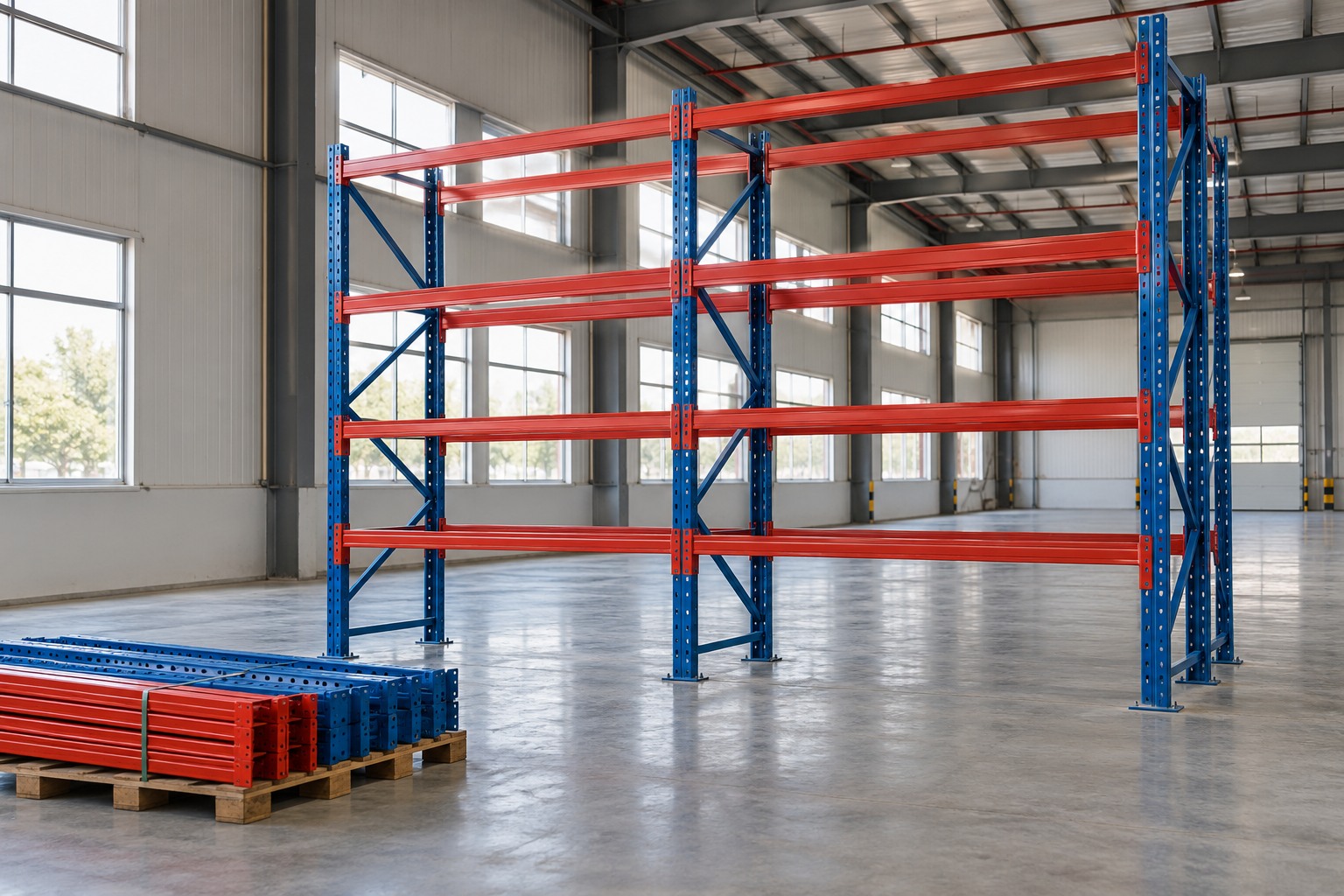

The question of buying or renting storage systems arises when an operation is moving into a new area, adding storage positions, or responding to changing demand. To compare the alternatives, start with the intended use. The arrangement's name alone does not explain which system will be delivered or which stages will be included.
This guide proposes a comparison of scopes. It aims to help organize request information and identify matters that need clarification in proposals. Prices, terms, and availability depend on each supplier and project; the commercial decision should consider the company's own planning.
1. Define the requirement before choosing an arrangement
Describe the products, their packaging, and how they will be placed on and removed from the system. Palletized loads, cartons for manual picking, and long materials may require different systems. The design must relate the configuration to the inventory and planned equipment, whether the system is purchased or rented.
AR Racking's technical pallet racking material relates height and level distribution to storage needs, equipment, and available space. For a commercial comparison, turn these references into a common request for suppliers: intended system, load characteristics, layout, and the known extent of the scope.
- Which products and packaging will be stored?
- How are access and replenishment handled?
- Which configuration is specified in the design?
- What information still requires assessment?
Sources for this section: AR Racking — Adjustable Pallet Racking, technical catalog [1]
2. Explain the intended duration and context of use
A transitional requirement may have an expected end date, while a permanent operation may still have open development plans. Record the usage horizon and what could change: location, number of positions, product profile, or handling rate. These details help compare proposals on similar terms.
Jungheinrich presents racking rental as an alternative for temporary uses, including order peaks or changes in production capacity. This does not determine which option is best for another company. The useful question is how each proposal addresses the stated period and potential changes, without assuming availability, automatic extension, or unrestricted adaptation.
Sources for this section: Jungheinrich — Racking and warehouse storage [2]
3. Compare the complete path to putting the system into operation
Two proposals with the same number of bays may involve different deliverables. One may cover supply only; another may include transport or installation. List the stages and ask each proposal to state clearly what it includes. This helps identify gaps before scheduling the work.
Also clarify the installation interfaces. Who prepares and releases the area? Who organizes receipt? Which equipment and documents must be available? The comparison becomes more useful when it distinguishes supply, services, and site conditions rather than reducing everything to the phrase complete system.
- Components and supply configuration.
- Transport, receipt, and unloading.
- Installation, equipment, and support areas.
- System documentation and references.
- Responsibility for identified outstanding matters.
4. Include changes and removal in the discussion
For rental, the request should state the desired duration and allow dismantling, collection, and return to be agreed. For a purchase, a possible future move also deserves attention: owning the parts does not mean that any combination or new layout is technically approved. The configuration must remain aligned with the documentation and intended conditions of use.
A hypothetical example helps: a company plans to use an area during a campaign but does not yet know whether it will keep the space afterward. Instead of treating uncertainty as certainty, it can ask proposals to explain the conditions for the initially planned period and how a new requirement would be assessed. That way, it compares stated information rather than assumptions.
5. Turn proposals into a list of answered questions
Bring the answers together in one document: configuration, period considered, included stages, responsibilities, and outstanding matters. Identify differences that need clarification before comparing arrangements. A detailed proposal for one system should not be compared with a generic request that has not yet defined the load or layout.
When talking to MonteLOG, send the information you already have and indicate whether you want to assess a purchase, rental, or both. The next step is to align the requirement and commercial scope. This organization does not replace technical assessments or the company's decision; it makes the initial conversation more focused and distinguishes confirmed matters from those still to be defined.
How to apply this to your planning
A useful comparison starts with a well-described requirement and ends with answered questions. By bringing together configuration, duration, and service stages, your company can discuss purchase and rental using a common reference and request a proposal aligned with the project.
Frequently asked questions
Is rental always appropriate for temporary use?+
Duration is one assessment criterion, but it does not decide the matter alone. Configuration, availability, installation, removal, and proposal terms must be considered for the actual requirement.
Can I compare proposals solely by the number of bays?+
Check that the bays represent the same system and configuration, and review the included components and services. Similar quantities may correspond to different scopes.
What information should I send first?+
State the location, load type and packaging, available layout, size of the requirement, and usage horizon. Add the desired services and known uncertainties.
Sources and further reading
Sources accessed on October 26, 2026. This content brings together general guidance; its application to your project should consider site conditions and the assessment of those responsible.
- AR Racking — Adjustable Pallet Racking, technical catalog ↗
The relationship between pallet racking configuration, load, space, and equipment. It does not establish MonteLOG's commercial terms.
- Jungheinrich — Racking and warehouse storage ↗
Presentation of racking rental for temporary use, order peaks, and production capacity changes. An offer from another supplier, with no commercial affiliation implied.