
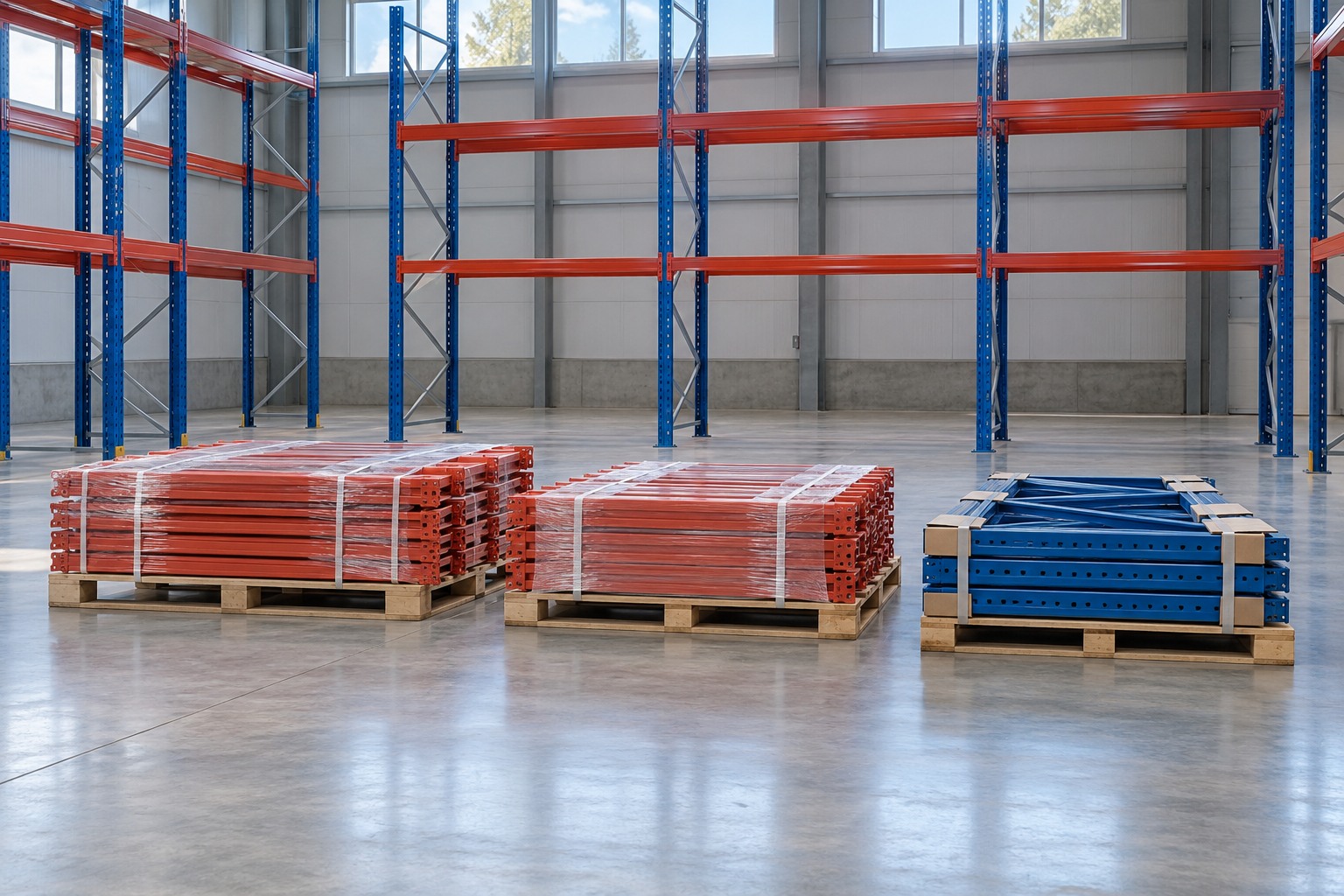
Relocating a warehouse involves more than transporting components. Goods, equipment, systems, and activities must fit into the new configuration. When the existing racking is to be reused, the discussion also involves documentation, component condition, and compatibility with the destination design.
Planning in stages makes these relationships visible. It does not guarantee no downtime or allow any installation to be reproduced in another building. This article offers a relocation planning guide focused on the information and responsibilities to discuss before contracting dismantling and reassembly.
1. Define what the relocation needs to transfer
Manufacturer Mecalux describes warehouse relocation as a project that can cover inventory, racking, equipment, and systems. Before organizing dates, distinguish relocation to new premises, expansion, and rearrangement within the same building. The extent of the transition determines which interfaces must be included in the survey.
To organize the request, create three groups: what will be transferred, what will remain, and what still requires a decision. This prevents the execution team from receiving a list of systems without knowing how they relate to the operation. Then identify who can confirm each piece of information.
- Areas and activities covered by the relocation.
- Systems and equipment involved.
- Materials requiring a defined destination.
- Outstanding decisions and those responsible for clarifying them.
Sources for this section: Mecalux — Warehouse relocation: planning and executing a move [1]
2. Relate the current installation to the new space
REB Storage Systems presents removal and relocation as a sequence connecting dismantling, transport, and reinstallation. This helps show why dismantling should not be discussed in isolation: the destination and its requirements form part of the assessment of the system to be moved.
Gather the available layout and documentation for the existing system. The destination configuration requires technical assessment, as do the condition and compatibility of the parts. Organized identification preserves references between assemblies; it does not, on its own, prove that all components can be reused in the new project.
Sources for this section: REB Storage Systems — Racking System Removal and Relocation [2]
3. Assign responsibility for transition interfaces
For each stage, record which conditions must be available and who confirms them. The list may include area release, goods removal, equipment, transport, and temporary storage. This is a guide to scope planning: the actual contracted items must be aligned in the proposal and in each party's responsibilities.
In a hypothetical example, the racking may leave the origin before the destination area is released. Planning must establish where the materials will be kept and how their references will be preserved during that interval. This anticipates an organizational decision without prescribing how to physically dismantle or install the system.
- Who releases the origin area?
- Who confirms destination conditions?
- How will transport and receipt be coordinated?
- Who follows up outstanding matters between stages?
4. Plan the sequence and checkpoints
Mecalux connects planning, preparation, transfer, and operational validation when moving a facility. Use this reference to structure the discussion about transition milestones. The schedule must reflect real dependencies rather than treating every activity as independent or assuming operations can continue without restrictions.
Agree how progress and conditions preventing continuation will be recorded. During reassembly, the work must follow the approved layout and applicable system instructions. When checking a stage, distinguish completed work from items awaiting a decision, part, or access. Technical and operational release must remain with the responsible parties defined for the project.
- Removal, transfer, and installation milestones.
- Dependencies between origin and destination.
- How changes in conditions will be communicated.
- Criteria for checking the scope of each stage.
Sources for this section: Mecalux — Warehouse relocation: planning and executing a move [1]
How to apply this to your planning
Organizing a warehouse move means connecting decisions before moving materials. A clear scope, component references, and stages with known dependencies help prepare procurement. The next step is to turn this information into a plan assessed for the origin, destination, and operation involved.
Frequently asked questions
Does moving in stages avoid warehouse downtime?+
The ability to maintain activities depends on actual site conditions and relocation interfaces. Planning should clarify constraints and alternatives without guaranteeing continuity before assessment.
Can dismantled parts be used in any new layout?+
Reuse depends on component condition, identification, and compatibility with the configuration approved for the destination. Technical assessment must guide the decision.
What information should I send to discuss relocation?+
Provide the origin and destination, existing systems, available documentation, known scope size, and desired timeline. Add access routes, areas that can be released, and responsibility for transport and other interfaces.
Sources and further reading
Sources accessed on October 26, 2026. This content brings together general guidance; its application to your project should consider site conditions and the assessment of those responsible.
- Mecalux — Warehouse relocation: planning and executing a move ↗
The scope of warehouse relocation and the connection between planning, transfer, and validation. A conceptual summary without reproducing the manufacturer's guide.
- REB Storage Systems — Racking System Removal and Relocation ↗
The relationship between removal, transport, and reinstallation in another space. A supplier's technical and commercial reference, without attributing its promises to MonteLOG.