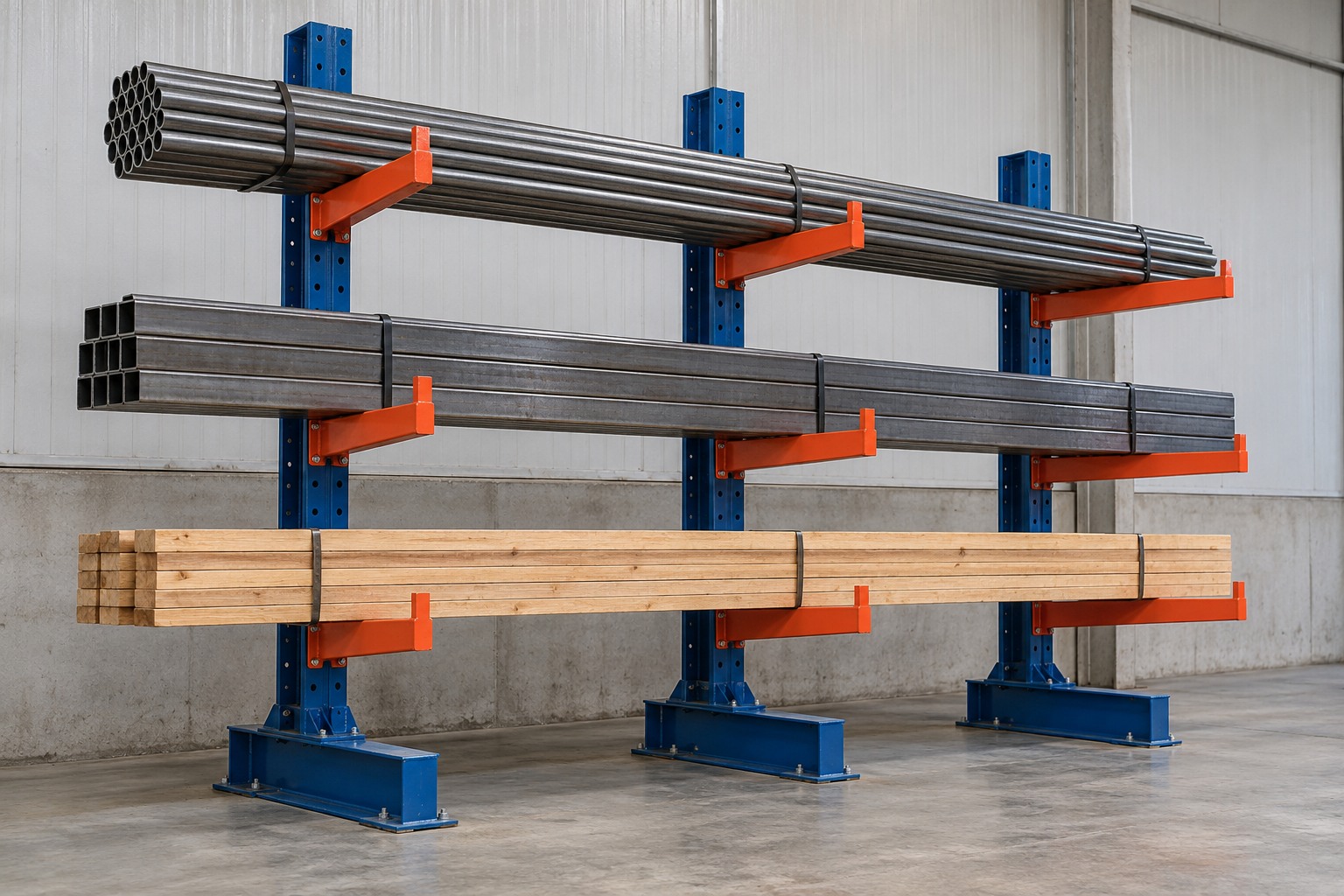
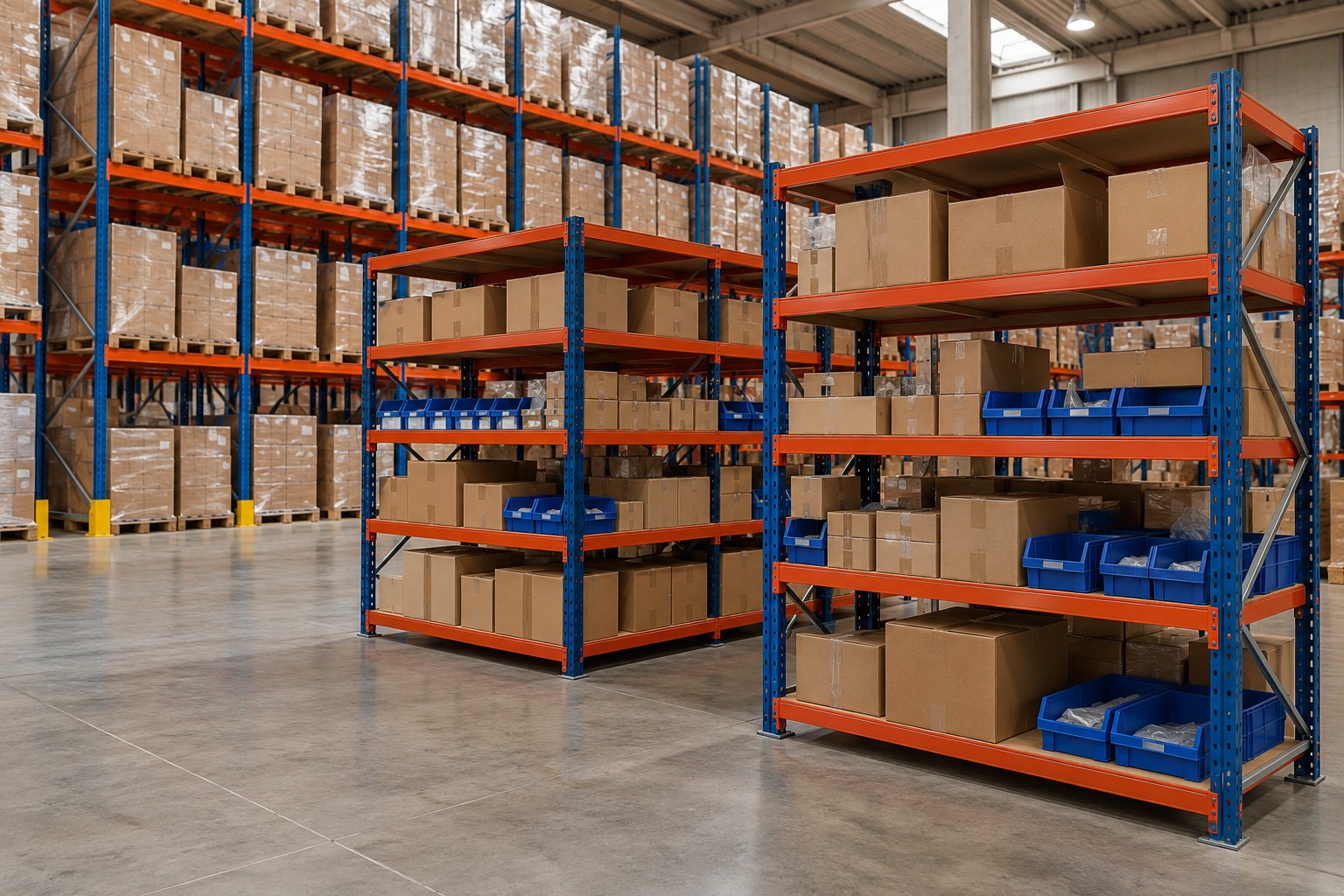
An operation may receive goods on pallets and dispatch orders in cartons or individual units. Asking only which rack fits the building therefore leaves part of the decision out. The choice must connect what arrives, how it remains in storage, and how it will be retrieved.
Pallet racking, mini pallet racking, and order picking often appear together in storage discussions, but they do not describe exactly the same thing. To compare proposals, separate the physical system, load type, and activity performed. This guide helps organize that conversation without replacing the installation design.
Start with the unit load and access method
In conventional selective pallet racking, palletized loads are distributed among positions accessible from the aisles. This distinguishes the system from configurations that group units in depth. Manufacturer Mecalux describes individual access as a feature of selective racking.
When presenting your requirement, describe the product's actual packaging. The same item may exist as a sales unit, a replenishment carton, and a received pallet. Recording these differences enables discussion of where reserve stock will be kept and where items will be picked for orders.
- Explain how goods enter and leave the warehouse.
- Separate product characteristics from packaging characteristics.
- Describe the planned equipment and access method.
Sources for this section: Mecalux — Pallet Racking [1]
Picking is the process; the system should support the activity
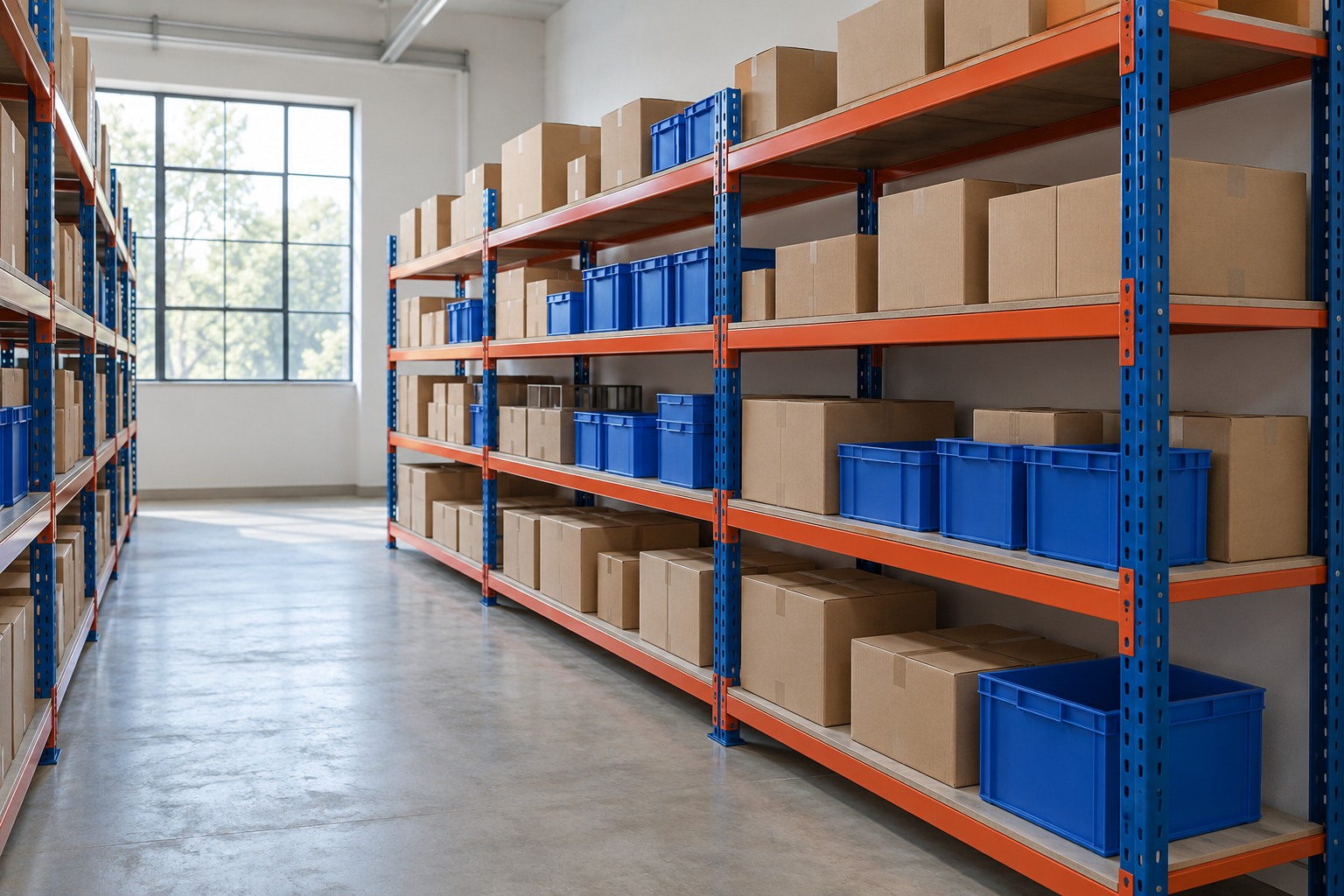
Order picking is selecting products to make up an order. Manually accessed shelving can organize cartons, parts, and other non-palletized items. AR Racking's longspan system is one example of this family, with storage arranged in levels and access to the stored products.
In a hypothetical situation, a reserve pallet replenishes an area where the team picks cartons. There is no need to treat the two areas as independent operations: replenishment and picking are connected. The system discussion must consider this interface, including when the activities take place in different sections.
- Identify reserve stock and the picking area.
- Explain how replenishment is requested and carried out.
- Explain whether orders leave in individual units, cartons, or pallets.
Sources for this section: AR Racking — Longspan Shelving [2]
How to assess a mini pallet racking proposal
The term mini pallet racking should not be used on its own as a purchase specification. When receiving a proposal using that name, ask for the system identification, bay configuration, and intended use. This makes comparison clearer than considering a photograph or component count alone.
The commercial brief should include product dimensions, loading methods, support surfaces, and supplied components. Also ask which documents will guide installation. A system's capacity should not be inferred from its name or appearance; it must correspond to the technically defined configuration.
- Request a description of the model and its configuration.
- Confirm what is included in the supply.
- Distinguish the system purchase from transport and installation services.
Turn the comparison into a warehouse brief
Prepare a summary that others can understand without immediately visiting the site. Gather the available layout, products, packaging, and known requirement for positions or bays. If a figure is not yet available, identify it as outstanding rather than filling the gap with an estimate presented as certainty.
Then compare proposals for the same scope. One quote may cover components only; another may include installation or transport. The comparison must show these differences. The supplier discussion should produce a clear reference for what will be delivered and which decisions still require project assessment.
- Location and description of the available space.
- Products, packaging, and access method.
- Requested configuration and existing documentation.
- Included services and each party's responsibilities.
How to apply this to your planning
The decision becomes more consistent when it starts with material flows and leads to the system. When talking to MonteLOG, present your operation and explore the dedicated pallet racking and picking page to agree the next step.
Frequently asked questions
Are picking and pallet racking mutually exclusive alternatives?+
Not necessarily. A warehouse can combine palletized reserve stock and picking areas. The layout and replenishment process must be planned together.
Does mini pallet racking have a standard capacity?+
The commercial name does not define a universal capacity. Consult the system specification and the configuration planned for your operation's loads.
What should I send to start the assessment?+
Describe the products, packaging, access method, location, available layout, and desired services. State which information still needs to be gathered.
Sources and further reading
Sources accessed on October 26, 2026. This content brings together general guidance; its application to your project should consider site conditions and the assessment of those responsible.
- Mecalux — Pallet Racking ↗
Characterizing selective racking by individual access to palletized positions.
- AR Racking — Longspan Shelving ↗
An example of shelving for organizing and manually accessing non-palletized loads.